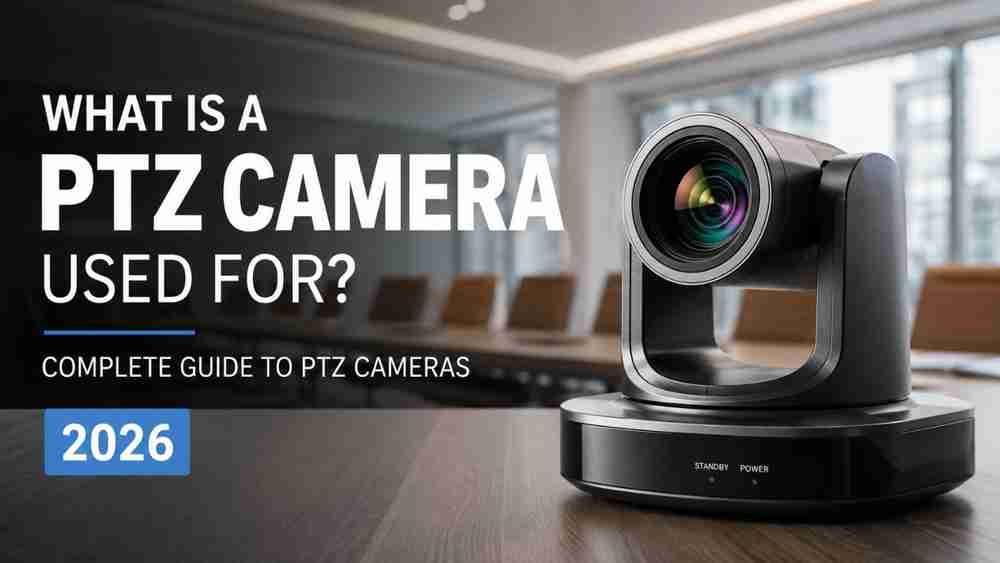
If you are upgrading a corporate conference room or outfitting a modern educational facility, you have likely encountered the term PTZ. Modern audio-visual setups require dynamic, responsive video equipment that goes far beyond the capabilities of static webcams. But exactly what is a PTZ camera used for, and why are they dominating the professional video landscape?
This comprehensive guide will break down everything you need to know about these versatile devices. We will explain how they function, their primary features, and the real-world applications where they excel. Whether you are an IT manager evaluating enterprise hardware or a system integrator building a smart classroom, you will learn how to choose the right model for your specific needs.
What Is a PTZ Camera?
To understand the hardware, we first need to look at the terminology. The PTZ camera full form stands for Pan, Tilt, and Zoom. Therefore, the PTZ full form simply refers to the directional and magnifying capabilities of the device.
When someone asks, "what is PTZ," they are inquiring about a robotic camera capable of moving its lens directionally and magnifying an image without losing clarity. So, exactly what is a PTZ camera? It is an advanced video capture device with built-in motors that allow it to rotate horizontally (pan), angle vertically (tilt), and adjust its focal length to bring distant subjects closer (zoom).
Unlike a standard fixed camera that only captures one specific field of view, a p t z camera offers incredible flexibility. A single unit can monitor a massive auditorium, actively track a moving speaker, or snap to different pre-configured angles at the push of a button.
Fixed Camera vs. PTZ Camera Comparison
Feature | Fixed Camera | PTZ Camera |
|---|---|---|
Field of View | Static, locked to one angle | Dynamic, covers up to 360 degrees |
Zoom Type | Usually digital (pixelated) | Optical (lossless quality) |
Automation | None | AI tracking and preset framing |
Best For | Small rooms, static security | Large rooms, dynamic presentations |
How Does a PTZ Camera Work?
A PTZ camera relies on highly precise, silent mechanical motors and advanced optical lenses to adjust its view. Let us break down the core PTZ camera function:
- Pan Movement: The camera rotates left and right on its horizontal axis, often allowing a full 360-degree rotation to capture the entire room.
- Tilt Movement: The camera pivots up and down vertically, ensuring subjects are perfectly framed regardless of their height or the camera's mounting position.
- Optical Zoom: Unlike smartphones that simply enlarge pixels (digital zoom), these cameras physically move glass lens elements to magnify the image while retaining full original resolution.
- Auto Focus: As the camera moves or zooms, built-in sensors rapidly adjust the focus to keep the image perfectly sharp.
Modern units have evolved drastically. A PTZ IP camera connects directly to a local network, transmitting high-definition video over a standard Ethernet cable while receiving power and control signals simultaneously. Users can operate the device using a physical joystick controller, web browser interfaces, or a dedicated PTZ camera app on a tablet or smartphone.
What Is a PTZ Camera Used For?
This is the most critical question for buyers. Because of their flexibility, PTZ pan tilt zoom cameras are the industry standard for dynamic environments. Here are the most prominent real-world applications.
Video Conferencing
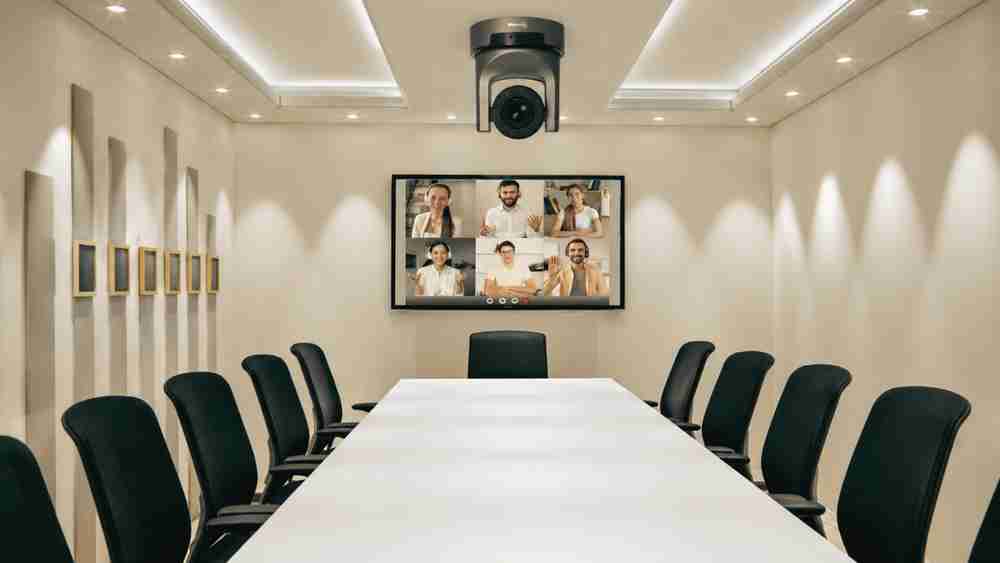
In large corporate boardrooms, a standard webcam cannot capture everyone clearly. PTZ units are placed at the front of the room to frame the entire table, and then smoothly zoom in on individual speakers as they present, ensuring remote participants feel fully engaged in the meeting.
Smart Classrooms
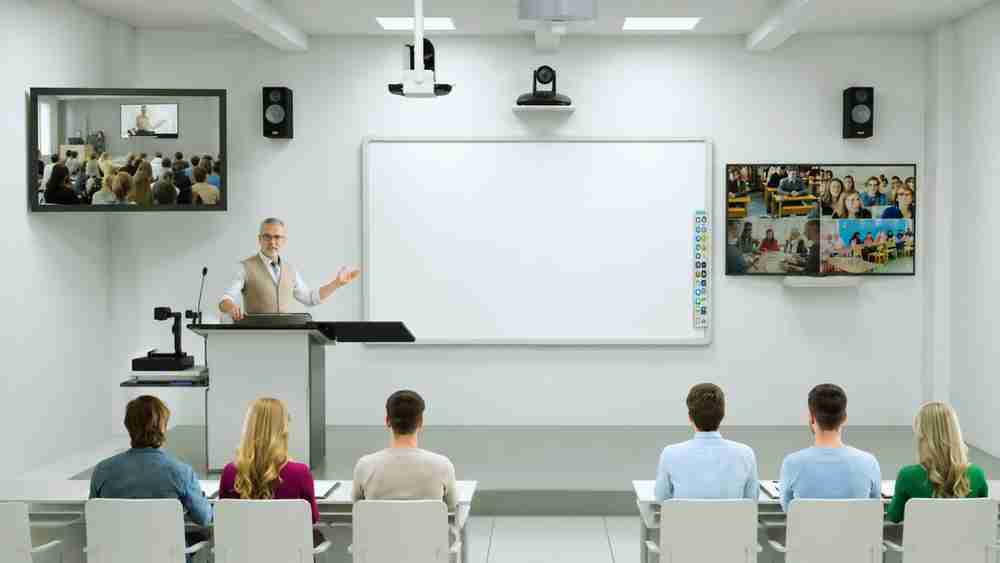
Modern education relies on hybrid learning. PTZ cameras equipped with AI tracking can automatically follow a professor as they walk across the stage or write on a whiteboard. This hands-free operation allows educators to teach naturally without worrying about staying "in frame."
Live Streaming
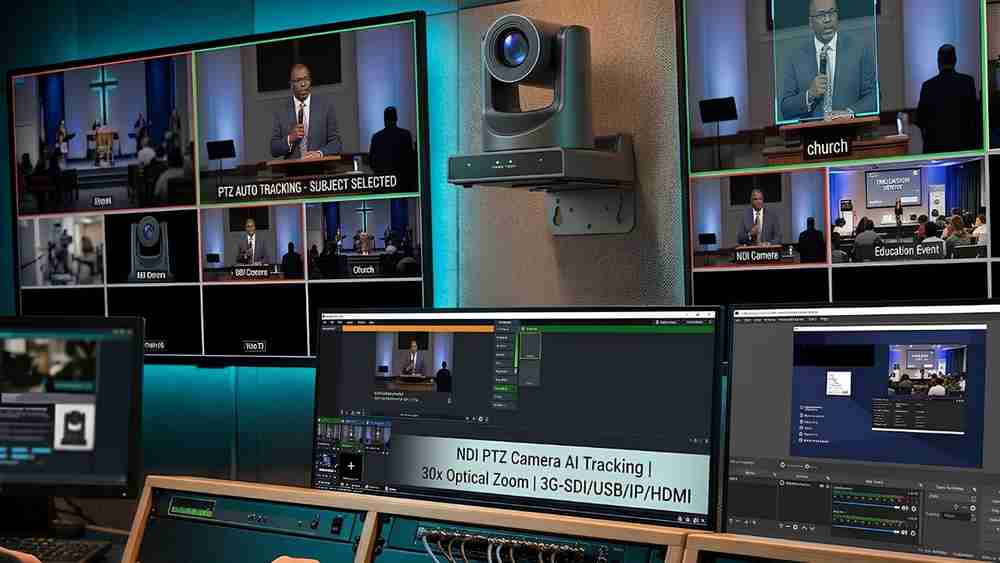
Content creators, esports arenas, and event organizers rely on PTZ systems to capture multiple angles of a live event. Because they can be controlled remotely, a single operator can manage three or four cameras to create a professional, multi-camera broadcast.
Broadcast Studios
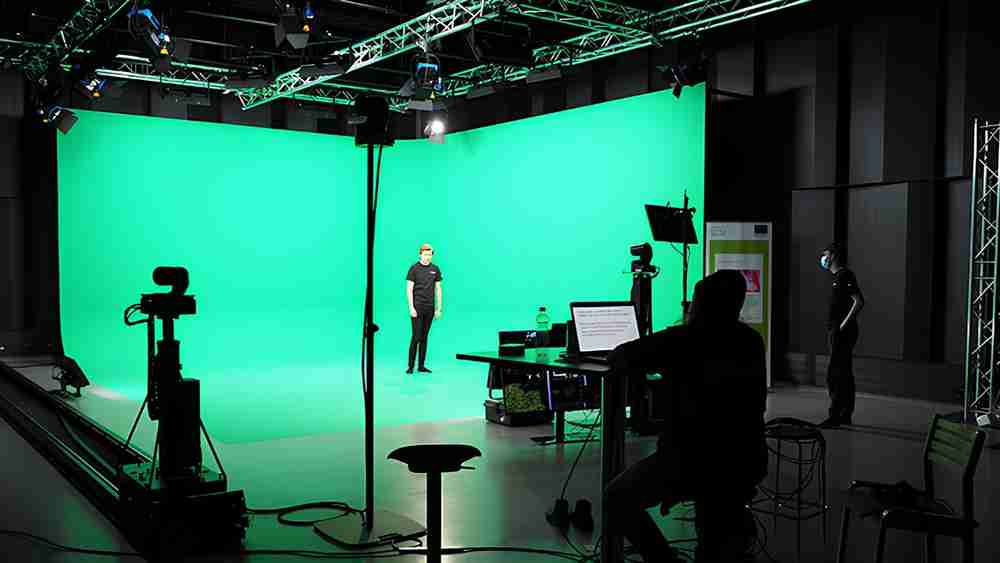
Newsrooms and television studios use high-end PTZ models to replace traditional camera operators. They provide broadcast-grade video quality and can smoothly move to specific preset angles with absolute precision.
Houses of Worship
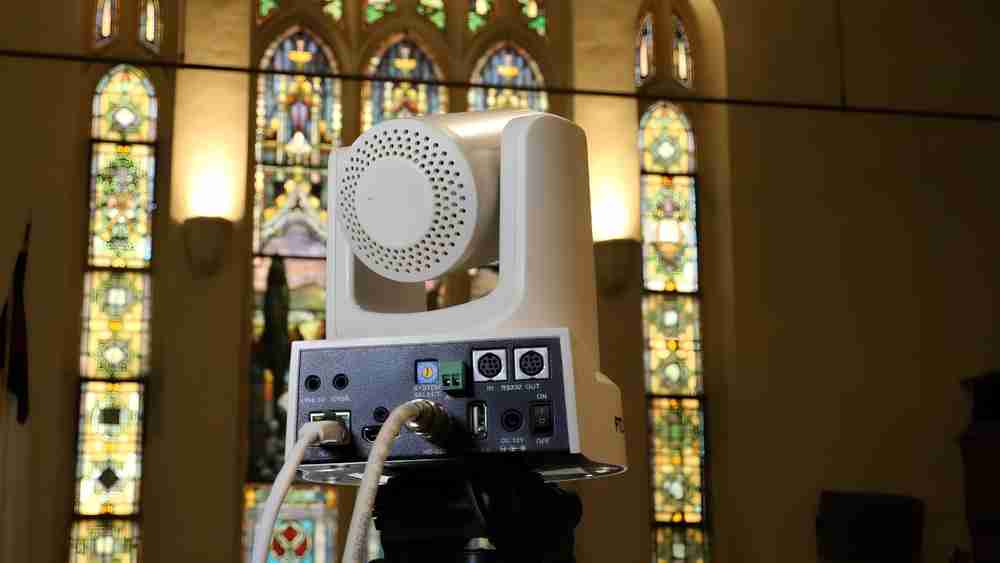
Churches, temples, and mosques frequently broadcast their services to online congregations. PTZ units are ideal because they can be mounted discreetly on walls or pillars, zooming in on the speaker or choir without disrupting the service with bulky equipment.
Auditoriums and Large Event Venues
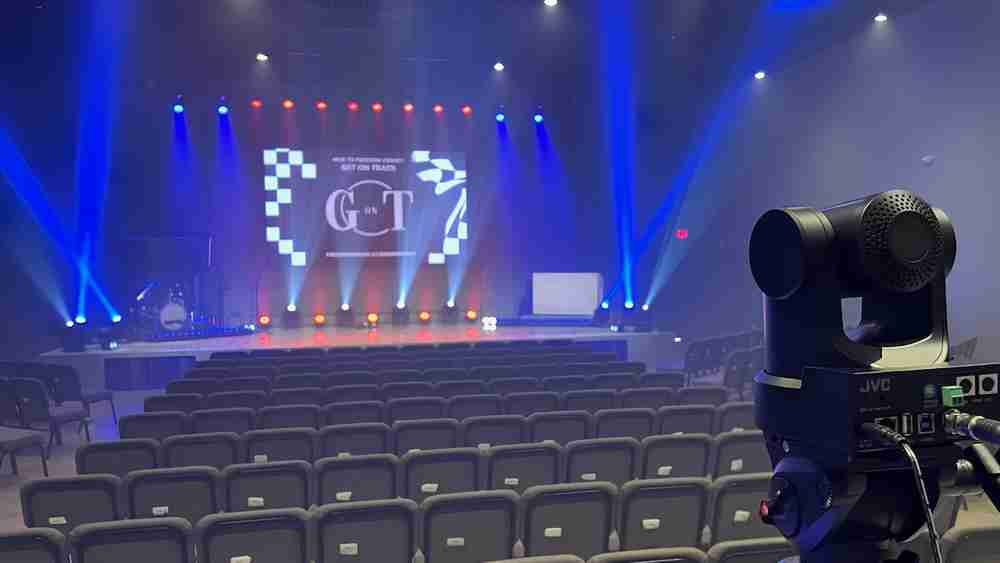
Concert halls and corporate auditoriums require cameras with massive optical zoom capabilities. A PTZ device mounted at the back of a 500-seat auditorium can capture a crystal-clear, close-up shot of the presenter on stage.
Manufacturing and Industrial Facilities
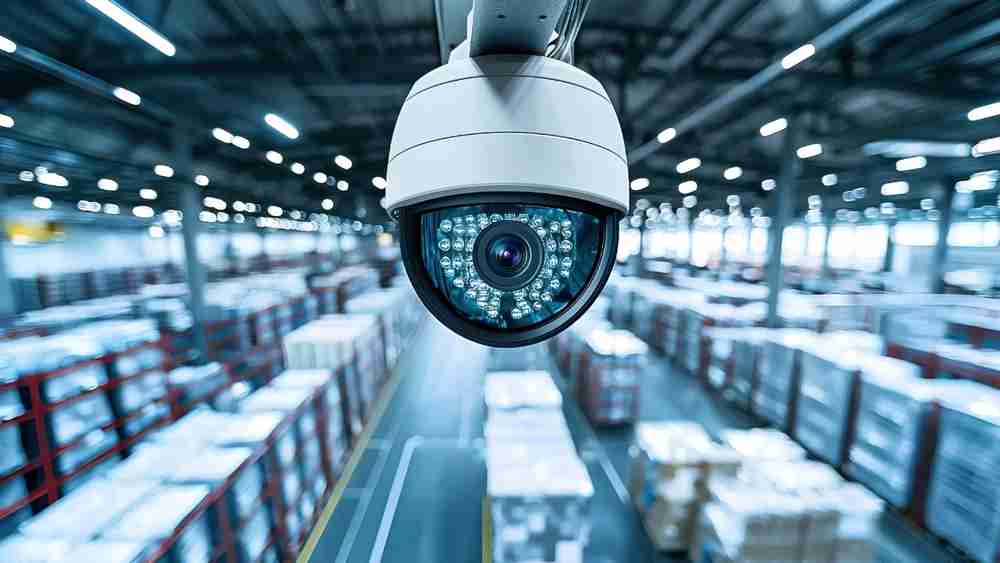
Plant managers use rugged PTZ cameras to oversee assembly lines and inspect complex machinery remotely. The optical zoom allows them to read gauges or inspect parts from safely across the factory floor.
Healthcare
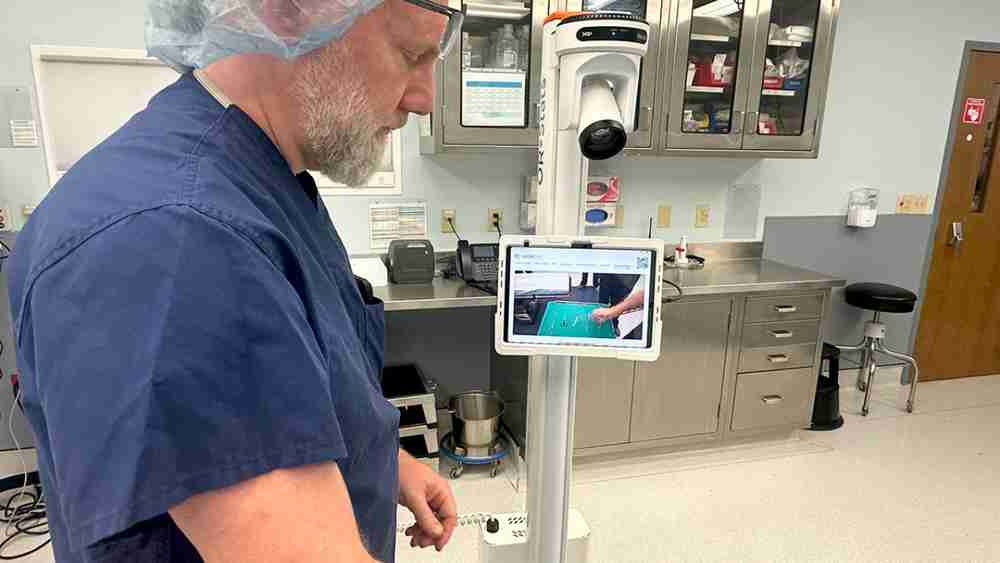
In operating rooms and teaching hospitals, PTZ cameras capture intricate surgical procedures. Medical students can watch high-definition, zoomed-in live streams from a separate location, ensuring a sterile environment.
Security Monitoring
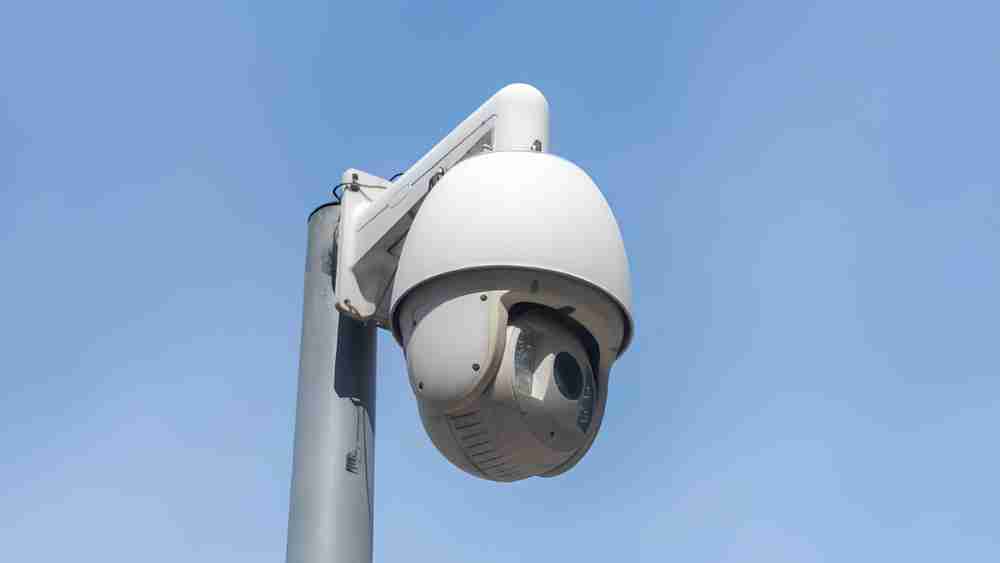
While this guide focuses on professional AV, it is important to mention the PTZ security camera. In parking lots, airports, and city centers, security personnel use PTZ units to actively scan vast areas and zoom in on suspicious activities, reading license plates or identifying faces from hundreds of feet away.
Key Features of PTZ Cameras
When evaluating different models, you will encounter several essential specifications:
- 360-Degree Pan: Continuous rotation for maximum coverage without blind spots.
- Optical Zoom Options: Ranging from 10X for small rooms to 40X for massive stadiums.
- AI Auto Tracking: Built-in intelligence that recognizes human figures and automatically follows them.
- Preset Positions: The ability to save specific angles (e.g., "Podium," "Whiteboard," "Audience") and snap to them instantly.
- Patrol Mode: Automated tours where the camera moves through a sequence of presets continuously.
- 4K Resolution: A 4K PTZ camera delivers ultra-high-definition video, providing unmatched clarity even when heavily zoomed.
- Low-Light Performance: Advanced sensors that maintain color and clarity in dimly lit environments.
- Power over Ethernet (PoE): A technology that allows a single network cable to provide power, video, and control signals.
- Versatile Output: Connections including HDMI for displays, USB for computers, and IP streaming protocols like NDI or RTSP.
Advantages of PTZ Cameras
The benefits of upgrading to motorized camera solutions are substantial. Primarily, they offer wide coverage and professional video quality that static cameras cannot match.
Furthermore, remote operation drastically reduces hardware requirements. Instead of installing five static cameras to cover different angles of a room, a single PTZ unit can do the job. AI automation saves time and labor costs, as you no longer need a dedicated camera operator to follow a moving speaker. Finally, their flexible installation options mean they can be mounted upright on tripods, upside down on ceilings, or sideways on walls.
Disadvantages of PTZ Cameras
To make an informed decision, you must also understand the disadvantages of PTZ camera technology.
First, they require a higher initial investment compared to standard webcams. Second, because they are complex mechanical devices with motorized joints, they have moving parts that could eventually require maintenance. There is also a slight learning curve; configuring IP networks and programming preset positions requires basic technical knowledge. Lastly, they are generally overkill for small huddle rooms where a fixed, wide-angle lens is more appropriate.
PTZ Camera Range
A frequent question from buyers is regarding the PTZ camera range. The effective range depends entirely on the optical zoom, lens quality, and sensor resolution.
- 10X Optical Zoom: Ideal for small to medium conference rooms. Effectively captures details up to 30 feet away.
- 20X Optical Zoom: Perfect for large boardrooms, classrooms, and small churches. Clear capture up to 60 feet away.
- 30X to 40X Optical Zoom: Built for auditoriums, stadiums, and outdoor security. Can capture distinct facial features from over 100 feet away.
PTZ Camera Price in India
Budgeting for audio-visual equipment requires understanding the market. The PTZ camera price varies heavily based on the sensor quality, zoom reach, and built-in automation. Below is an estimated breakdown of the PTZ camera price in India to help you estimate your PTZ camera cost.
Category | Typical Features | Estimated Price Range (INR) |
|---|---|---|
Entry Level | 1080p, 10X Zoom, USB connection | ₹25,000 - ₹45,000 |
Conference PTZ | 1080p, 12X-20X Zoom, USB/HDMI | ₹45,000 - ₹80,000 |
AI Tracking PTZ | 1080p/4K, 20X Zoom, Auto-tracking | ₹80,000 - ₹1,50,000 |
4K PTZ Camera | 4K Ultra HD, 20X-30X Zoom, PoE | ₹1,20,000 - ₹2,50,000 |
Broadcast PTZ | 4K, 30X+ Zoom, NDI, Broadcast grade | ₹2,50,000 - ₹5,000,000+ |
(Note: Pricing is approximate for 2026 and depends largely on the specific brand, taxes, and vendor services).
How to Choose the Best PTZ Camera
Selecting the right hardware ensures long-term satisfaction. Consider the following factors:
- Room Size: Measure the distance from the camera mounting point to the furthest subject to determine the required optical zoom.
- Resolution: Decide if standard 1080p is sufficient, or if your displays and streaming platforms require 4K clarity.
- AI Requirements: If the presenter will be moving constantly (like a teacher), prioritize AI auto-tracking capabilities.
- Connectivity: Ensure the camera has the right outputs (USB for Zoom/Teams, HDMI for local screens, IP for network broadcasting).
- Environment: For outdoor installations, ensure the camera has a proper IP weather-resistance rating.
Best PTZ Camera Brands
When shopping for reliable equipment, several manufacturers lead the industry in optical quality and mechanical durability. Some of the most reputable brands include:
Each of these brands offers distinct advantages. Some excel in seamless video-conferencing integration, while others dominate the high-end broadcast television space.
Frequently Asked Questions
What is a PTZ camera used for?
It is used to capture dynamic, high-quality video in environments like boardrooms, classrooms, live events, and auditoriums by panning, tilting, and zooming to frame subjects perfectly.
What is PTZ camera full form?
The full form is Pan, Tilt, and Zoom.
How does a PTZ camera work?
It uses silent mechanical motors to move the lens horizontally and vertically, alongside internal moving glass elements to optically zoom in on subjects without losing resolution.
What is a 4K PTZ camera?
It is a PTZ unit equipped with an Ultra-High-Definition sensor, delivering video quality four times sharper than standard 1080p cameras.
What is PTZ camera range?
The range depends on the optical zoom. A 10X camera covers about 30 feet, while a 30X camera can cleanly capture subjects from over 100 feet away.
What are the disadvantages of PTZ cameras?
They require a higher initial budget than fixed cameras, contain motorized parts that may need future maintenance, and require a basic understanding of network or remote controls.
How much does a PTZ camera cost?
In India, basic USB models start around ₹25,000, professional AI-tracking models range from ₹80,000 to ₹1,50,000, and broadcast models can exceed ₹2,50,000.
Which PTZ camera is best?
The "best" camera depends on your specific needs, room size, and budget. Top industry brands include Sony, Panasonic, PTZOptics, ATVI, and Lumens.
Is a PTZ camera suitable for video conferencing?
Yes, they are the industry standard for medium to large video conferencing spaces because they can zoom in on individual speakers at long tables.
Can PTZ cameras be controlled remotely?
Absolutely. They can be operated via hardware joysticks, software interfaces on a computer, IR remotes, or dedicated smartphone apps over an IP network.
Conclusion
Understanding what is a PTZ camera used for is the first step in designing a modern, highly capable audio-visual environment. From transforming how remote students experience a university lecture to giving a corporate boardroom a professional, broadcast-quality feel, these devices are indispensable. By leveraging their powerful optical zoom, rapid mechanical movement, and cutting-edge AI tracking, organizations can significantly elevate their communication infrastructure.
Ready to Upgrade Your Video Infrastructure?
If you are looking to integrate high-quality PTZ cameras into your corporate office, educational institution, or live-streaming setup, Edumark Technologies is here to help. As a trusted provider of premium audio-visual solutions across India, we offer expert consultation, seamless installation, and reliable ongoing support. Contact Edumark Technologies today to find the perfect PTZ camera solution tailored to your exact needs and budget!